Kaiāulu is our best first response
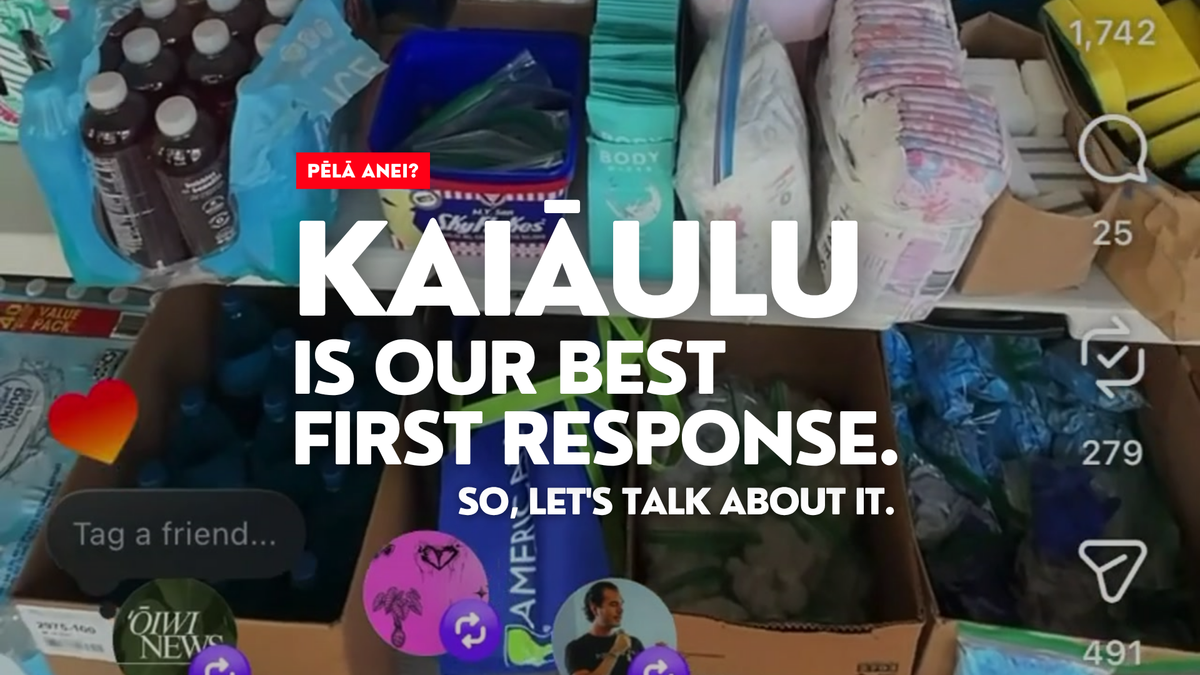
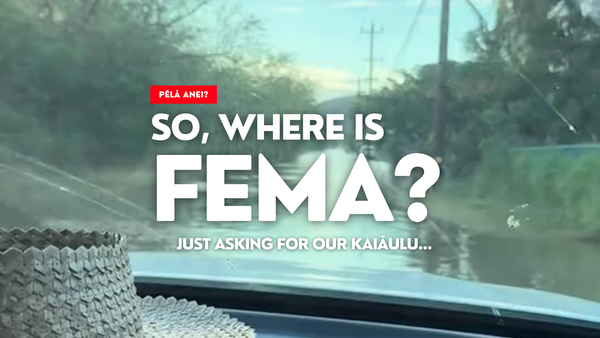
Over the past few weeks, back-to-back Kona Low storms drenched the pae ʻāina in the worst flooding Hawaiʻi has seen in over twenty years. And before any official alert went out, before any evacuation order was signed, our people were already moving.
Door to door. Group texts. Instagram posts asking who needs help, who has supplies, who can take in a family tonight. Neighbors wading through water to make sure no kūpuna was left alone. By the time state offices closed and emergency declarations were drafted, families in Haleiwa were already in the streets shoveling mud, hauling debris, showing up the way our lāhui has always shown up.
No press conference. No photo op. Just kōkua.
This is not the first time. It will not be the last time. Look at every major disaster to hit these islands in living memory and you will find the same arc:
- Disaster happens.
- Community mobilizes.
- Government arrives later.
- Government absorbs community infrastructure.
- Community gets displaced from the very relief they built.
The very people who did that work often find themselves displaced from the relief they created with their own hands.
This is the pattern. This is why people are exhausted. This is why people are angry. And it is time we talked about why it keeps happening and what we can do to stop it.
This Is Not Incompetence. This Is Worldview.
Here is what we need to say plainly, because it changes everything about how we respond:
The gap between community response and government response is not just a timing problem. It is a values problem. It is a structural problem. And until we name it as such, we will keep being surprised by something that was never going to work any other way.
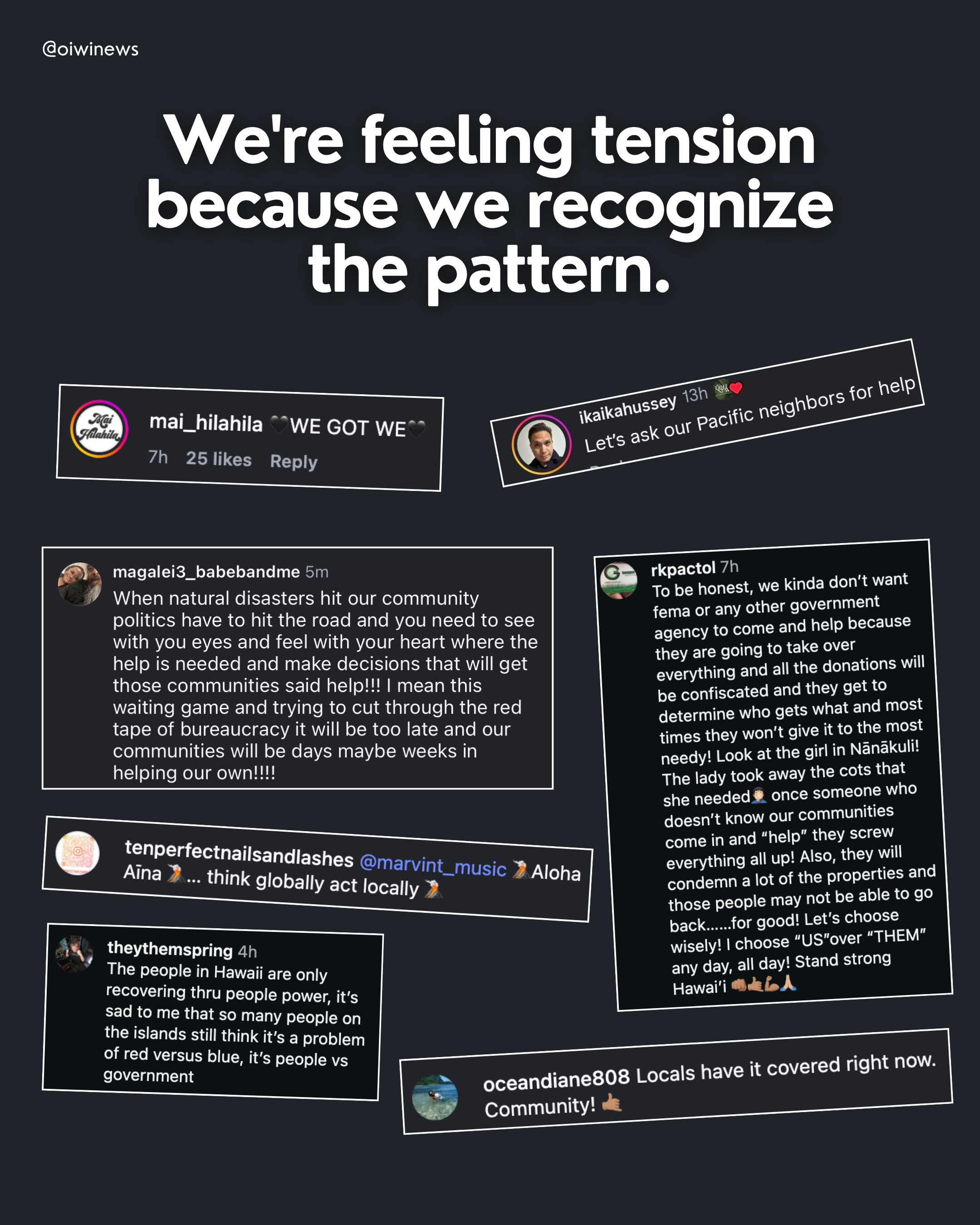
Hawaiʻi, like indigenous cultures across the Moananuiākea and around the world, is built on a fundamentally collective community architecture. You’ve heard the saying. “It’s a kākou thing.” Or as said in one of our favorite recent comments by @mai_hilahila “ 🖤WE GOT WE🖤”
Our aliʻi and kūpuna didn't govern by maniacally accumulating power. They distributed kuleana by ahupuaʻa, by connection, by skill, by our relationship and understanding of ʻāina and each other. Leadership was not measured by how much one person controlled, but by how well the whole thrived. From our aliʻi to ʻohana, we thought in generations. We still do. And when crisis comes, we band together. We huipū, mālama, aloha, kōkua aku, kōkua mai. Pela iho la ka nohana ʻohana, ea?
Today, other cultures refer to this as regenerative and sustainable living. We just call it pono.
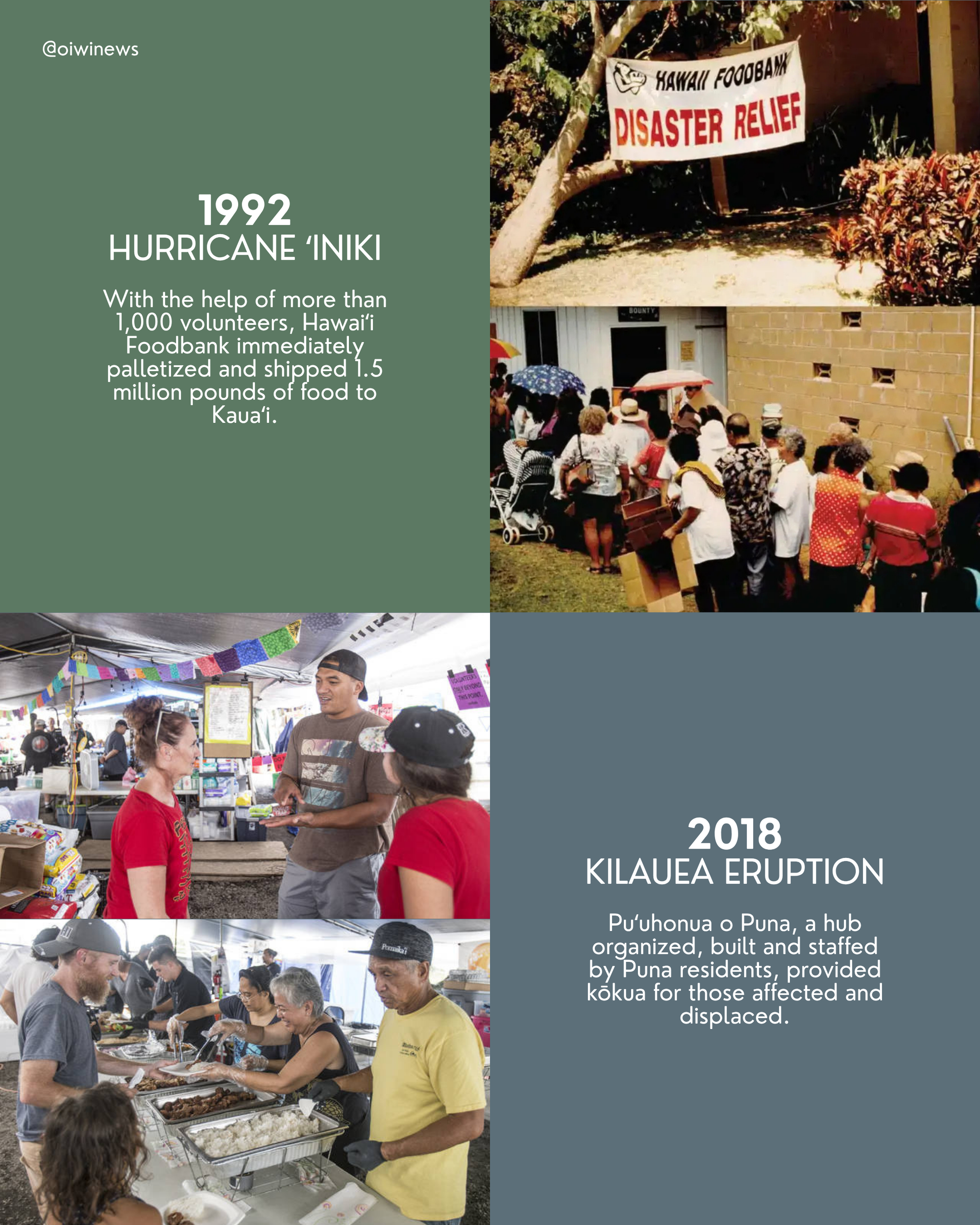
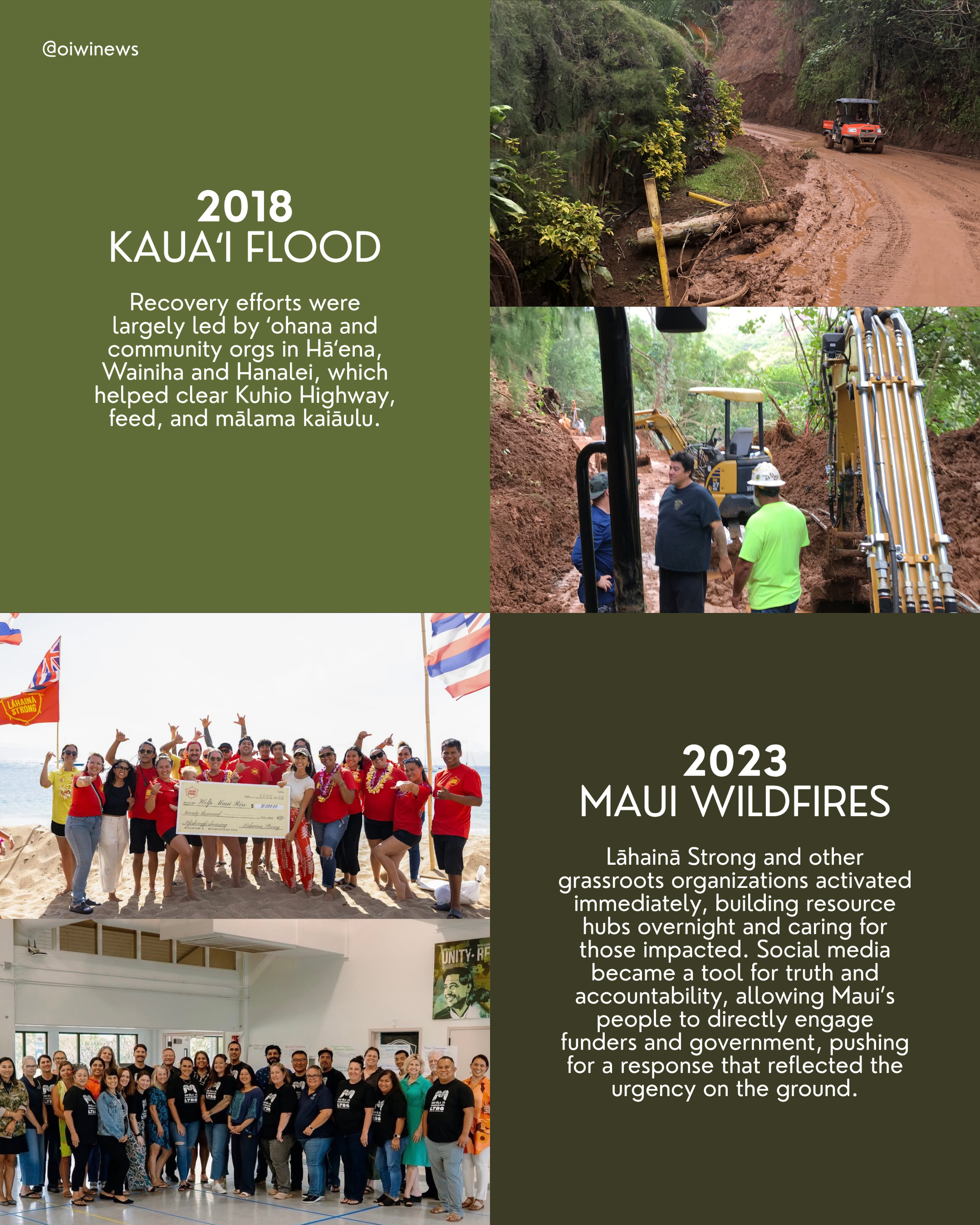
Here are a few relevant accounts from our history of how our kaiāulu has shown up as our own first responders.
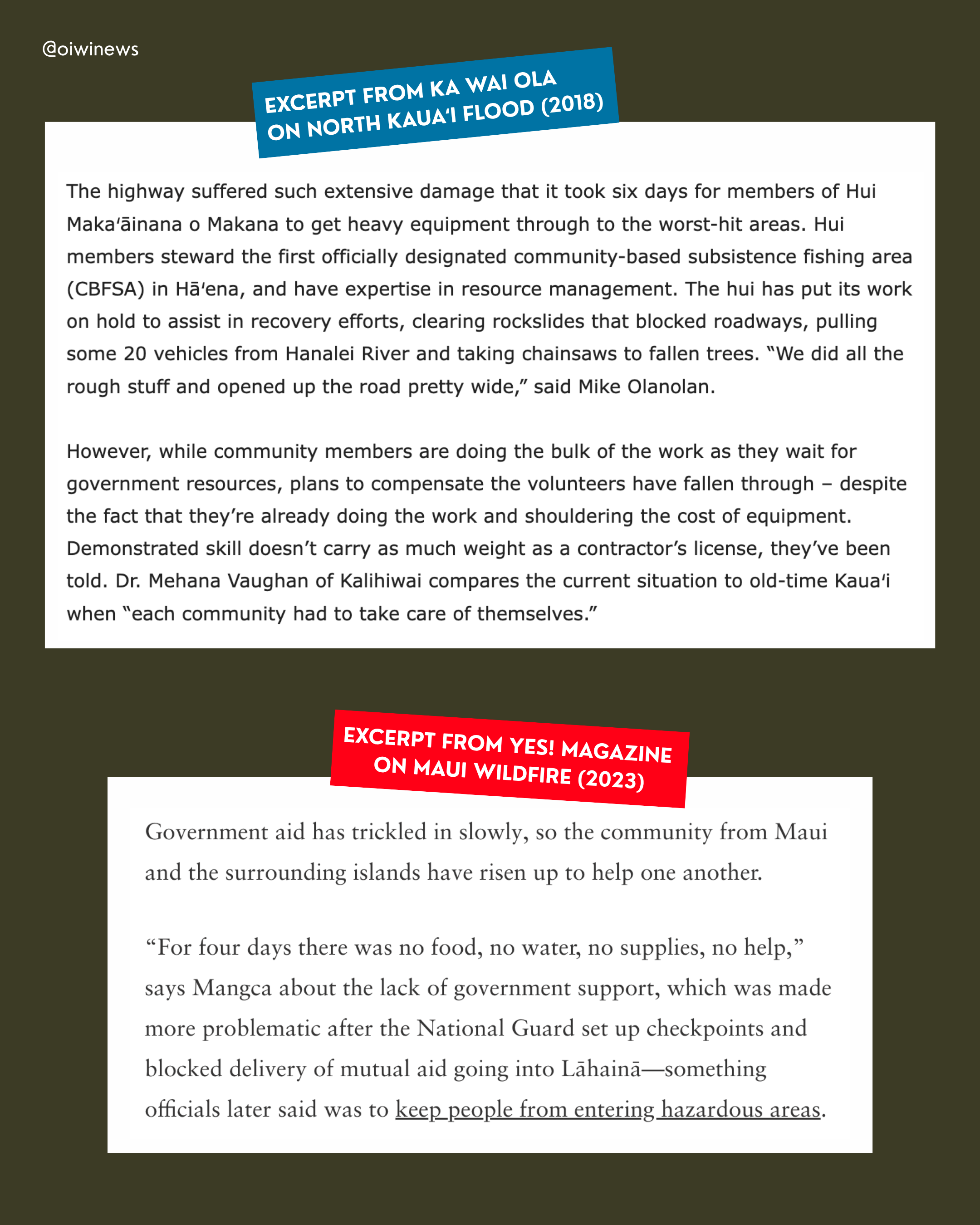
The United States federal government was not built from this worldview. It was built from an opposing one to sharply contrast a monarchy. It runs on election cycles: short bursts of authority, measured in two- and four- and six-year windows, each one beginning with the endless question of who gets power next?
Its agencies are designed with strict rules to manage resources and demonstrate outcomes that justify their own continued existence. It produces aid at scale in the shape of controllable programs, not relationships or shared responsibility. It treats fairness and justice as words on paper and tests to pass, not living realities with centuries of burden. It understands communities as voting populations, not as unique communities with their own leadership, their own infrastructure, their own genius.
Letʻs be clear, this is not a moral indictment of every person who works in government. Many of our local officials are from our kaiāulu — people who think like us and are doing genuine work inside a system that was not designed for collective care. They serve as bridges between ʻohana networks and official channels, between community knowledge and a malihini bureaucratic process. They hold important kūlana. They matter and we see them.
But even the best local leader eventually has to engage in the political arena and ask for support in the system they function within. And when it reaches the federal level — when FEMA arrives, when Army Corps takes over, when the official recovery apparatus descends — it carries with it the full weight of a system forged in colonialism. That is the intended architecture.
It is, as they say, not the flaw but the feature.
Are we the little red hen?
There’s an irony found in an American fable about the little red hen. She found grain and asked her neighbors to help her plant it, tend it, harvest it, and bake it into bread. At every step, her neighbors declined. And when the bread came out of the oven all warm and golden, the direct result of her labor alone, they appeared ready to eat.
There are several different endings to this fable. In some, the hen shares the bread. In others she keeps it to herself. If our community is the little red hen, we are in the middle of the moʻolelo again.
Our communities are our safety net and our first response. We are actively helping each other through the crisis. The meals, the shelter, the information networks, the emotional labor, the leadership that emerges organically because we know each other and we trust each other and we move at the speed of that trust.
But sooner or later, the official apparatus arrives. It absorbs the credibility our community built. It sets up its infrastructure adjacent to ours. It forces us to prove ourselves by the standards they set. It issues the declarations and holds the press conferences. And then — and this is the part that must be said — it tells the very people who built the first response that they no longer have access to the spaces, the resources, and the recovery infrastructure they erected with their own hands.
That is not aid. That is acquisition and appropriation.
So What Do We Do With This?
First, we protect the pilina.
The first response has always been ours. The knowledge of who lives on which road, which kūpuna needs to be checked on, which ʻohana has nowhere to go, that intelligence does not live in any federal database. It lives in us. In our phone contacts, our group chats, our church networks, our hālau, our taro patches and fishing grounds and neighborhood associations. Our pilina is our infrastructure. It has always been our infrastructure. And we should protect it, formalize it, and refuse to hand it over the moment an agency truck rolls in.
Second, we ask: What would it look like for these systems to actually function differently?
We ask this harder question not with resignation, but with genuine demand. Because the federal government does not have to operate this way. Agencies can be required to follow community-led recovery frameworks. Aid can be structured to flow through existing community networks rather than bypassing them. Local elected officials (many of whom are already working to bridge this gap) can be empowered with more authority, more resources, and less federal override. Recovery can be designed to strengthen community leadership rather than replace it.
This is not fantasy. Indigenous-led disaster recovery frameworks exist beyond cultural advisorship. Communities around the world have fought for and won the right to lead their own recovery. It requires naming the power dynamic clearly enough to change it.
Indigenous-led recovery is not an idea. It is already happening. Maui has shown what it looks like when Native Hawaiian leadership is trusted across every part of recovery.
Kākoʻo Maui set a new national standard: a non-federal Disaster Recovery Center built by community, for community. No uniforms. No weapons at the door. Just trusted local care navigators walking alongside families, helping them access resources, fight for federal support, and rebuild with dignity.
Nā ʻAikāne o Maui, a cultural Native Hawaiian-led nonprofit, became cultural monitors and trainers for the U.S. Army Corps of Engineers during cleanup efforts, helping ensure that cultural practices, community relationships, and the needs of generational families were respected throughout the process.
This is what recovery can look like.
Now the call is clear. Support Indigenous-led recovery efforts. Fund Native organizations. Trust community leadership.
Let’s not wait for the next disaster to build these systems. Let’s make this the standard now.
E ka lāhui, our story isn’t pau yet. What ending will we decide?